Midterms, Congress flips to the Democrats: the market sold overnight, then changed its mind
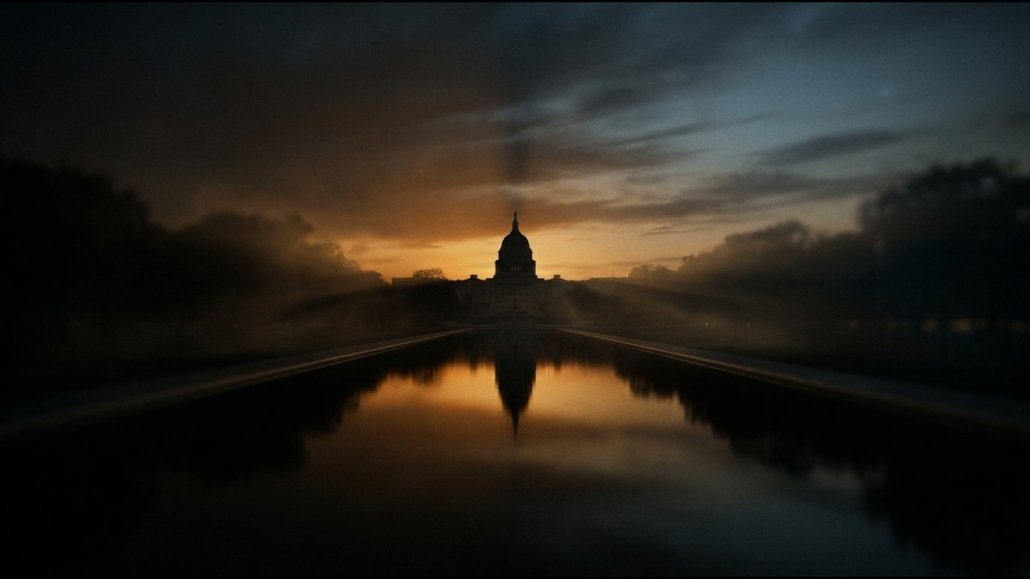
Hi trader,
if you picked up your phone last night to check the results, you did something you shouldn’t do.
And if, while you were at it, you opened the Nasdaq future chart, you saw a nice minus two percent.
This morning the same future was down only a few tenths.
What happened in between, between the night and your morning coffee, is the most useful thing I can tell you today.
What happened, in short
Yesterday’s midterm elections went to the Democrats, and not by a little.
According to CBS and CNN, the House went to the Democrats shortly after 10 p.m. New York time, that is around 3 a.m. here in the Canary Islands (UK time) and 4 a.m. CET.
The Senate a little over an hour later (the AP made the calls in the reverse order, the Senate first and the House at dawn).
The seats taken from the Republicans are seven: Texas, Ohio, Kansas, Iowa, both Carolinas, and Maine, where Susan Collins lost.
Texas and Kansas hadn’t seen a Democratic senator in decades.
Some races were still open this morning, Alaska, Mississippi and Nebraska above all (in Nebraska the challenger, Dan Osborn, is an independent), but control is no longer in question.
In plain words: from 3 January, when the new Congress is sworn in, and for the two years that remain, Trump governs with Congress against him.
Americans call it gridlock.
Laws that pass only if both sides want them, and a president who keeps his veto.
The market’s night
Here is how the market reacted overnight, according to Reuters, FXStreet and CNBC.
| What | Overnight | At 7 this morning, UK time |
|---|---|---|
| Nasdaq 100 future | more than -2% at the worst point | about -0.3% |
| S&P 500 future | down more than one point | about -0.2% |
| US 10-year | down 6 basis points, around 4.90% | back up around 4.93% |
| Dollar index | about -0.4/-0.5%, around 101.3 | |
| EUR/USD | around 1.123 | |
| Gold | above 4,000 dollars | around 4,030 |
The first reflex was textbook.
Sell tech, because a Democratic Congress means more rules on AI and big tech, and in Texas, where the Democrats also won the governorship, some fear a slowdown on data centers.
Sell the dollar and buy Treasuries, because less room for new public spending means less deficit to finance.
Buy gold, because when in doubt you buy gold.
And then, as the hours went by, the market did what it almost always does: it changed its mind.
Why it changed its mind
For a very simple reason.
It was already priced in.
On prediction markets the Democratic “sweep”, House and Senate together, was trading at 39% in February, according to the Covers tracker.
Yesterday morning, on the eve of the vote, Kalshi and Polymarket had it around 75%.
So the scenario climbed for eight months, one piece at a time, and anyone trading had it right in front of their eyes.
Last night no surprise arrived, a confirmation arrived with the volume turned up.
The less expected part was the size: Kansas, and in Texas the governorship too, with Greg Abbott beaten.
Add that the AI story on the markets had already been creaking for a few weeks, and the overnight -2% makes more sense: expected news landing on a theme that was already fragile.
Then someone remembered two things.
The first: a different Congress doesn’t change Nvidia’s earnings next quarter.
The second is put well by Tai Hui of J.P. Morgan Asset Management, quoted by Reuters: Trump still has the power of veto.
Congress can block him, he can block Congress.
Gridlock, exactly.
And markets usually don’t do badly in gridlock: according to Bloomberg data cited by Saxo, divided government is historically the best scenario for the S&P 500 in the three months after the vote.
Michael Arone of State Street put it this way, and I’m writing it down: the big risk for markets is not the blue wave, it’s investors overreacting to the blue wave.
The lesson of the night
I’ll tell you how I see it.
The first reaction to expected news is not the real reaction.
At night, even on an election night with more volume than usual, the book is thinner than during the day.
Spreads widen, and it takes less to make a move that looks huge.
If last night you had gone short the Nasdaq at the worst point because “the Democrats won, tech is crashing”, this morning you would have been sitting there watching the future climb back, with your stop getting closer and your account getting thinner.
It’s like the start of a Grand Prix.
At the first corner anything can happen, someone goes straight on, someone gains three places.
But the race isn’t decided at the first corner.
It’s decided when the tyres have warmed up and you can see who has the pace.
What I watch today
Today the tyres warm up, because the vote isn’t the only thing on the calendar.
The market has to digest the election result and, in the same afternoon, two data releases.
| When (UK / CET) | What |
|---|---|
| 13:15 / 14:15 | October ADP, private employment. Expected around 67,000 |
| 15:00 / 16:00 | October ISM services. Expected around 54.8, after 54.9 in September |
| Friday 13:30 / 14:30 | The official employment report, the NFP. Expected around 65,000, after 29,000 in September |
And above it all there’s the Fed.
On 28 October it kept rates on hold at 3.75-4.00%, but with two dissents, both in favour of a hike: Lisa Cook and Beth Hammack.
A Fed split towards hiking, a labour market creating few jobs, and from January a Congress that won’t easily expand public spending.
Those are three forces pulling yields in different directions.
That’s why today I’m not watching the vote.
I’m watching whether last night’s recovery holds at the New York open, and how the 10-year reacts to the ADP.
If the Nasdaq starts falling again on real volume after the cash open, at 15:30 CET, then the night was right.
If it holds, the night was just a night.
How I handle it
The rules are the same as on any day with a big event.
No positions built on the headline.
“The Democrats won” is not a setup.
It’s a scenario the market had been watching climb for eight months.
The map is drawn beforehand.
Overnight levels, the Nasdaq future low, the options walls on the S&P and the Nasdaq.
On days like this part of the move is made by market makers hedging, and gamma exposure tells you where the points are where price tends to stop or to accelerate.
I look at it on the Thunder Desk, for free, together with today’s macro calendar.
I open it in the morning, not when I already have a position open and I need an excuse.
Size gets cut beforehand.
With two data releases and a vote to digest in the same afternoon, the spread can widen and the stop can slip.
How much the worst scenario really costs me, I work out now, not one minute before the ADP.
And everything goes in the diary.
What I expected, what price did overnight, what it did at the open.
In two years there’s the presidential election, and that day you’ll already have a case of your own to reread.
The diary is there for exactly this.
Three points to take home
- Congress has gone to the Democrats, House and Senate. For two years Trump governs with Congress against him and the veto in his hand. Gridlock, and historically markets don’t mind gridlock.
- The overnight reaction was overdone, because the news was already priced in. On the eve of the vote the sweep was trading around 75%. The Nasdaq future hit -2% and then won back almost all of it.
- Today the data decides, not the vote. ADP at 14:15 CET, ISM services at 16:00 CET, and the NFP on Friday. The real test is whether last night’s recovery holds at the New York open.
A scenario the market has watched climb for months is not a surprise. It’s a confirmation with the volume turned up.
I’ll close with a rule I repeat to myself every time.
Election nights are made for sleeping.
Trading is done during the day, with the map in your hand.
Suerte Amigo!
Tiziano Brunno
Tradingblog
Want to put your market reading to the test?
Compete and challenge other traders inside an Arena in a demo environment, with no real capital at risk. Discover the Performance Arena Events by The Thunder Trader.
Disclaimer: purely informational and educational content. It does not constitute financial advice or an invitation to trade. Trading involves the risk of capital loss.